Source Crystal Salt Essential Oil Diffuser for Home Decor Gifts
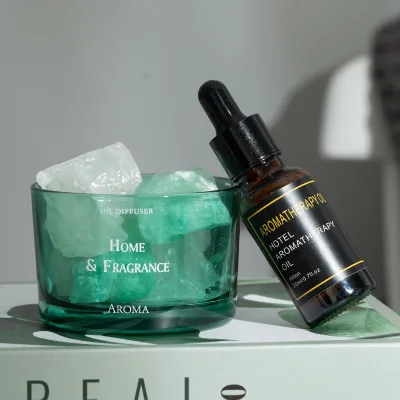
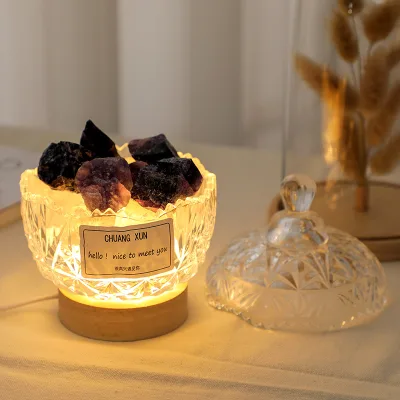
Explore 30 listings for the Crystal Salt Essential Oil Diffuser, featuring options in natural crystal stone and glass. Buyers can compare specifications like weight, dimensions, and packaging to find suitable units for home decor, aromatherapy, and business gifts.
Key considerations
Products List




Comprehensive Sourcing Guide
Strategic Sourcing Guide for Crystal Salt Essential Oil Diffusers
Understanding Product Variants and Material Composition
The core keyword "Crystal Salt Essential Oil Diffuser" encompasses a diverse range of products that rely on the porous nature of specific minerals to disperse essential oils into the surrounding environment. In the current market, the terminology often overlaps between "crystal stone," "natural crystal," and "salt" diffusers, yet the material composition varies significantly across listings. Based on observed product attributes, the primary materials identified include Natural Crystal Stone, Natural Crystal, and Glass. It is critical for buyers to distinguish between these materials, as they dictate the absorption rate, aesthetic finish, and longevity of the diffuser.
Some product listings explicitly identify the material as "Natural Crystal Stone," which typically refers to minerals like rock salt, quartz, or other porous stones capable of absorbing oil. Other entries specify "Natural Crystal" or "Glass," indicating a different manufacturing process where the diffuser may be a solid block or a vessel containing the oil rather than a porous stone itself. The distinction is vital for procurement because a porous stone diffuser functions by capillary action, whereas a glass-based unit may rely on a wick or a separate oil reservoir. Buyers must verify the specific material composition before placing orders, as the term "crystal salt" is sometimes used loosely in marketing to describe any stone-like aesthetic diffuser.
Furthermore, the physical properties of the material influence the product's weight and dimensions. Observed data indicates specific weight ranges, such as a crystal weight of 260g or 330g, alongside jar sizes like 9.188.1cm or 8.8*5cm. These specifications suggest that the diffuser is not merely a decorative object but a functional unit with precise volume requirements for the essential oil. The transparency of the material is another variable, with some products listed as "Translucent," which affects how the light interacts with the oil and the stone structure. When sourcing, procurement teams should request material certificates or detailed composition sheets to ensure the product matches the intended functional requirements, particularly if the buyer is targeting a specific aesthetic or performance characteristic.
Technical Specifications and Dimensional Standards
Technical specifications are the backbone of any B2B procurement agreement, ensuring that the delivered goods meet the exact requirements of the end-user. For crystal salt essential oil diffusers, the most critical specifications include dimensions, weight, and the capacity for essential oil. The observed product data reveals a wide range of standard sizes, from compact units measuring 20x15x25 cm to smaller, more intricate designs like 7.57.58 cm. These dimensional variances directly impact the packaging logistics and the shelf space required for the product in retail environments.
The weight of the diffuser is another key technical parameter. Listings show specific weights such as 260g and 330g for the crystal component, with total package weights reaching up to 495g. These figures are essential for calculating shipping costs, as the density of the stone or crystal material will significantly affect the freight charge. Buyers must also consider the "Jar Size" specifications, which indicate the internal volume available for holding the essential oil. Dimensions like φ8.85cm or 9.18*8.1cm suggest different oil capacities, which in turn influence the duration of the aromatherapy effect.
In addition to physical dimensions, the product models vary widely, with identifiers such as DS001, JS-YS260, CRL001, and numerical codes like 078, 080, and 620. These model numbers often correspond to specific design iterations, material batches, or customization options. The "Sculpt" attribute indicates that many of these products offer customized shapes, ranging from natural, unpolished forms to refined, geometric designs like "Rectangular" or "Tropical" styles. The "Style" attribute further categorizes these items as "Modern" or "Luxury," which influences the target market segment.
Buyers should verify that the technical specifications provided by the supplier align with the intended application. For instance, a "Tropical" design might be better suited for resort gift shops, while a "Luxury" style with specific dimensions might be ideal for high-end corporate gifts. The "Standard" attribute in some listings refers to the material itself (e.g., "Natural crystal stone"), while in others, it may refer to the packaging dimensions or the product's overall size class. It is imperative to cross-reference the model number with the specific dimensions and weight to avoid discrepancies in the final shipment.
Compliance, Certification, and Safety Verification
Compliance and certification are non-negotiable aspects of sourcing essential oil diffusers, particularly when the products are intended for use in homes, hotels, or as gifts. While the observed data includes a low-confidence background reference to "CE" certification, this should not be treated as a guaranteed attribute for all listed products. Instead, buyers must treat certification status as a variable that requires active verification from the supplier. The CE mark indicates conformity with health, safety, and environmental protection standards for products sold within the European Economic Area, but its presence must be confirmed through official documentation rather than assumed based on general market trends.
When evaluating compliance, buyers should focus on the safety of the materials used. Since the diffusers are designed to hold essential oils, the materials must be non-toxic and chemically stable. The "Natural Crystal Stone" and "Glass" materials generally pose low risks, but the sourcing of the raw materials and the manufacturing process must adhere to relevant safety standards. Buyers should request test reports that verify the absence of harmful substances, such as heavy metals or volatile organic compounds (VOCs), that could leach into the essential oils or be released into the air during use.
Additionally, the packaging materials must comply with international shipping standards. The observed packaging options include "Boxed," "Carton," "OPP Bags," and "Rubber Band" or "Elastic Band" bindings. These materials must be durable enough to protect the fragile crystal or stone components during transit. For products intended for export, the packaging should also meet environmental regulations regarding recyclability and waste reduction. Buyers should inquire about the specific packaging standards used by the supplier, ensuring that the "Normal Packing," "Individual Gift Box," or "PVC Box" options meet the destination country's import requirements.
It is also important to verify the origin of the products, as this can impact compliance with trade regulations. The observed data lists origins in "Guangxi" and "Shenzhen Guangdong," both in China. Buyers should ensure that the supplier can provide proof of origin and that the products comply with any specific trade agreements or tariffs applicable to the destination market. The "Sample Lead Time" of around 7 working days and "Bulk Order Lead Time" of around 35 working days are operational metrics that should be factored into the compliance timeline, ensuring that all necessary documentation is prepared well in advance of the shipment date.
Cost Drivers and Pricing Dynamics
The pricing of crystal salt essential oil diffusers is influenced by a complex interplay of factors, including material costs, customization levels, order volume, and packaging requirements. The observed price range in the market spans from $0.45 to $89, a significant variance that reflects the diversity of product quality, design complexity, and order quantities. This wide range underscores the importance of understanding the specific cost drivers before engaging with suppliers.
Material cost is a primary driver, with "Natural Crystal Stone" and "Natural Crystal" generally commanding higher prices than glass or synthetic alternatives. The weight of the crystal, such as the 260g or 330g variants, directly correlates with the raw material expense. Additionally, the "Customization" attribute plays a crucial role in pricing. Products with "Customized" sculptures or specific design requests often incur higher unit costs due to the additional labor and tooling required. Buyers should expect a premium for bespoke designs compared to standard models like DS001 or JS-YS260.
Order volume is another critical factor, as evidenced by the observed Minimum Order Quantity (MOQ) range of 1 to 1000 units. Some listings show an MOQ of 100, while others require 500 or even 1000 pieces. Higher MOQs typically result in lower unit prices due to economies of scale, but they also require a larger upfront investment. Buyers must balance their budget constraints with their inventory needs to determine the optimal order size. The "Sample" availability, with a lead time of around 7 working days, allows buyers to test the product before committing to a large order, which can help mitigate financial risk.
Packaging and logistics also contribute to the overall cost. Options like "Individual Gift Box," "PVC Box," or "Window" packaging add to the unit cost but may be necessary for retail presentation. The "Rubber Band," "Elastic Band," and "Raffia" packaging options are more cost-effective but may offer less protection. Buyers should calculate the total landed cost, including shipping, duties, and packaging, to get a accurate picture of the final price. The "Bulk Order Lead Time" of around 35 working days should also be factored into the cost of capital, as longer lead times can impact cash flow and inventory turnover.
Supplier Evaluation and Operational Capabilities
Evaluating suppliers for crystal salt essential oil diffusers requires a thorough assessment of their operational capabilities, production capacity, and reliability. The observed data indicates that suppliers are located in key manufacturing hubs such as "Guangxi" and "Shenzhen Guangdong," which are known for their expertise in stone processing and glass manufacturing. Buyers should verify the supplier's production capacity to ensure they can meet the required order volume within the specified lead time.
The "Sample Lead Time" of around 7 working days and "Bulk Order Lead Time" of around 35 working days are key performance indicators of a supplier's efficiency. A supplier that consistently meets these timelines demonstrates a well-organized production process and reliable logistics. Buyers should also check the supplier's ability to handle "Customization" requests, as this is a common requirement for B2B clients. The "Sculpt" attribute suggests that many suppliers offer design flexibility, but buyers must confirm the supplier's design team's capacity to execute complex customizations without compromising quality.
Quality control is another critical aspect of supplier evaluation. Buyers should inquire about the supplier's quality assurance processes, including inspection protocols for raw materials, in-process checks, and final product inspections. The "Natural Crystal Stone" and "Glass" materials require careful handling to prevent breakage, so the supplier's packaging and handling procedures are essential. Buyers should also verify the supplier's experience with international shipping, as the "Carton" and "Boxed" packaging options must be robust enough to withstand long-distance transport.
Communication and responsiveness are equally important. A supplier that provides clear and timely updates on order status, lead times, and any potential issues is more likely to deliver a satisfactory experience. Buyers should assess the supplier's ability to provide detailed product information, including technical specifications, material certifications, and compliance documentation. The "Sample" availability is a good indicator of a supplier's willingness to engage with potential buyers and demonstrate product quality before a large order is placed.
Quality Control and Long-Term Procurement Strategies
Implementing a robust quality control (QC) strategy is essential for ensuring the consistency and reliability of crystal salt essential oil diffusers. Given the fragile nature of the materials, such as "Natural Crystal Stone" and "Glass," QC should focus on preventing breakage and ensuring the structural integrity of the product. Buyers should establish clear acceptance criteria for dimensions, weight, and visual defects. The observed specifications, such as the "Jar Size" and "Crystal Weight," should be used as benchmarks for QC inspections.
Long-term procurement strategies should prioritize building strong relationships with reliable suppliers who can consistently meet quality and delivery standards. This involves regular audits, performance reviews, and continuous communication. Buyers should also consider diversifying their supplier base to mitigate risks associated with supply chain disruptions. The "Customization" attribute offers an opportunity to develop exclusive product lines, but this requires close collaboration with the supplier to ensure that the design and production processes are aligned.
Sustainability is another important consideration for long-term procurement. Buyers should evaluate the environmental impact of the materials and packaging used. The "Natural Crystal Stone" and "Glass" materials are generally eco-friendly, but the sourcing of these materials and the manufacturing process should be assessed for sustainability. Buyers should also consider the recyclability of the packaging materials, such as "Carton" and "Boxed" options, to align with corporate sustainability goals.
Finally, buyers should plan for scalability. As demand grows, the supplier's ability to increase production capacity without compromising quality becomes critical. The observed "Bulk Order Lead Time" of around 35 working days suggests that suppliers have a baseline capacity, but buyers should discuss potential expansion plans to ensure that the supplier can meet future demand. By focusing on quality control, supplier relationships, and sustainability, buyers can establish a resilient and efficient procurement strategy for crystal salt essential oil diffusers.
FAQs
What materials are used for crystal salt essential oil diffusers?
Products are primarily made from Natural Crystal Stone, Natural Crystal, or Glass. Some listings specify the material as Natural Crystal Stone, while others use Glass or Natural Crystal, so buyers must verify the exact composition before ordering.
Which customization options are available for these diffusers?
Customization is available for sculpting and design, allowing for customized shapes. Buyers can request specific styles like Modern or Luxury, and the product name often reflects the specific design iteration requested by the client.
How long does it take to receive samples and bulk orders?
Sample lead time is around 7 working days, while bulk orders take approximately 35 working days. These timelines apply to standard production cycles and should be factored into the overall procurement schedule for accurate planning.
What are the typical minimum order quantities for these products?
Minimum order quantities vary significantly, ranging from 100 to 1000 pieces depending on the supplier and model. Some listings require 100 units, while others set the threshold at 500 or 1000 pieces for bulk pricing.
Can I find diffusers made from Natural Crystal Stone?
Yes, several listings explicitly identify the material as Natural Crystal Stone. This material is distinct from Glass or other crystals and is often used for its porous properties in aromatherapy applications.
Where are these diffusers typically manufactured?
Products originate from locations in China, specifically Guangxi and Shenzhen Guangdong. Buyers should verify the specific origin for each order as manufacturing hubs differ and may impact shipping logistics and trade compliance.